


Today CultFilms honours a cinematic visionary, the Carpigian director Liliana Cavani who celebrates her 90th birthday on this day.
Transgressive, bold and full of unbridled conviction, Cavani made her mark on the cinematic landscape evolving from astute documentarian to fearless filmmaker in an illustrious career that spans over seven decades, Cavani, a female director — a rarity in her period of filmmaking — has continuously demonstrated a sensitivity and profound understanding towards her cinematic subjects which shines throughout her varied filmography. Her cinematic oeuvre a wealth of transgressive, powerful works rooted in the complexities of the human condition with an astute awareness of how our collective past informs upon our present.
After graduating from Bologna University in Linguistics and Philology, Cavani abandoned her initial plans to become an archaeologist, instead pursuing a love of cinema ingrained in her at an impressionable age. This led to a move to Rome to study documentary filmmaking at the prestigious Centro Sperimentale di Cinematografia — an institution that counts Michelangelo Antonioni and Marco Bellocchio as past graduates. Upon graduation, Liliana Cavani began shooting documentaries for Italian state broadcaster Rai before transitioning to fiction. Cavani’s work as a documentarian would be indicative of her great interest in the intersection between the political and the historical, a theme present in many of her documentaries of the 1960s. It was during this period that Cavani would shoot documentaries on topics such as the history of the Third Reich and the Stalin years and, most notably, the contribution and experiences of women who participated in the Italian Resistance in La donna nella Resistenza.
Cavani’s work as a documentarian was followed by a biographical film for Rai on Francesco d’Assisi in 1966. The film, starring Lou Castel as d’Assisi, attracted controversy in its depiction and apparent criticism of Catholicism, dubbed as blasphemous amongst swathes of the Italian population. The controversy would come to signify a common strand in Cavani’s career in which her taboo-shattering works would attract the ire of religious conservatives. Never the less, Cavani would remain loyal to her convictions continuing to explore contentious subject matter throughout the course of her career, not as a means of courting controversy but as a pursuit of her intellectual interests and civic duty.
Cavani’s first cinematic foray came somewhat accidentally in 1968 with Galileo; a biographical picture detailing the life of the celebrated Italian astronomer and scientist, Galileo Galilei. The film, originally devised as a production for television, was banned by the Italian censor due to its anticlerical subject matter subsequently becoming a cinematic release upon securing a distributor. Cavani’s depiction of Galileo as a historical figure placed particular emphasis on the conflict between scientific advancement and experimentation against the oppressive orthodoxy of religion. However, the overarching focus of the picture was arguably the societal — as well as personal — ramifications of the suppression of free thought by the church as an all encompassing, powerful institution, a theme that carried great resonance in the late sixties at the time of the film’s production. Cavani, a director intently interested in the humanity of her subjects, brought pathos to her depiction of Galileo as a misunderstood and isolated individual propelled by great conviction and intelligence. Galileo, a heretic and a challenger to established thought would somewhat mimic Cavani’s own fearlessness in her approach to filmmaking as a tool of civic importance.
Galileo’s overarching political convictions would continue throughout Cavani’s filmography and into her next cinematic endeavour, I cannibali in 1969; a modern reinterpretation of the Antigone of Sophocles which would capture the tumultuous socio-political landscape of the era in its stark and unwavering allegorical political odyssey. The film featured central performances from a pre-Bond Britt Ekland and poster child for 1960s counterculture, Pierre Clementi capitalising on both actors enigmatic and hippie like qualities capturing the cultural zeitgeist of the period. Experimental in nature and imbued with powerfully symbolic imagery, Cavani’s surrealistic cinematic dystopia would reveal the director’s poetic visual language exemplified in the bleak images of corpse laden grey Milanese streets. The film would become, in Cavani’s words, “a tragic prophecy” eerily predicting the Piazza Fontana bombing in Milan in the December of 1969.
Cavani’s next work was a contemporaneous picture, the Lucia Bosè helmed L’ospite in 1971. The film was a continuation of the Carpigian director’s interest in psychological themes as well as ones of civic import. L’ospite concerns the release of a woman, played by Lucia Bosè, afflicted with mental illness and her struggle to re-enter society after a prolonged period confined within a psychiatric hospital. The relationship between Bosè’s Anna and writer, Piero (Glauco Mauri) is utilised as a means of exploring the complexities of female psychiatric illness and the challenges that befall those exiting psychiatric institutions as they try to adapt back into society. Cavani’s film was pertinent in a society where psychiatric institutions and treatment of mental illness was increasingly under the microscope. The conversation surrounding mental health care in Italy, highlighted by films such as Cavani’s, reached a crescendo in 1978 with the passing of the Basaglia Law in which mental health care was restructured in Italy with the closure of all psychiatric hospitals.
Despite L’ospite’s limited budget, the film would prove to be an important work and was submitted out of competition to the Venice Film Festival. The involvement of Bosè, a greatly respected figure in Italian cinema, lent Cavani’s film a certain cinematic pedigree. Throughout Cavani’s career she would align herself with titans of cinema such as Marcello Mastroianni, Dirk Bogarde and Michel Piccoli; a testament to her artistry and reputation as a filmmaker. Whilst, her cinematic output was perhaps not as plentiful as some of her contemporaries, the onus for Cavani was on quality projects that interested her, a directorial approach that would not falter throughout her career.
The 1970s continued to be a fruitful and diverse period for Cavani as she embarked on her next project, the ambitious undertaking of a cinematic adaptation of the philosophical teachings of Tibetan Yogi, Milarepa. With an unconventional narrative structure, the likes of which had previously been experimented with in I cannibali, Cavani tells the story of Milarepa concurrently with that of a young boy in the modern age. Such parallels reveal a meditative tale on the quandaries of modern life, the significance and similarities of the past and our individual and collective destinies and the role of spiritualism in an increasingly divisive and technologically advanced age.
Milarepa would be followed by Cavani’s most audacious and internationally renowned work, Il portiere di notte (The Night Porter); a haunting, psychological drama about the rekindling of a sadomasochistic relationship between a concentration camp survivor and her former persecutor after they are reacquainted by happenstance in postwar Vienna. Cavani explores the lasting psychological effects of the Nazi regime with sensitivity whilst detailing the complex and disturbing implications of her subject underlined by provocatively unflinching imagery. The transgressive power of ‘The Night Porter’ was celebrated by many whilst condemned in equal measure, criticised for its controversial subject matter. Cavani, a fearless auteur powered by personal conviction, welcomed the wider debate that her film generated — a debate that continues fifty years after its initial release. With powerful leading performances from Charlotte Rampling and Dirk Bogarde set against the sumptuous yet simultaneously bleak environments that Cavani was so adept at cultivating, ‘The Night Porter’ remains one of her greatest and most powerful works.
Cavani courted controversy once again in 1977 with Al di là del bene e del male (Beyond Good and Evil); a loosely biographical account of German philosopher, Friedrich Nietzsche and his tempestuous relationships with German author, Paul Rée and Russian feminist writer and psychoanalyst, Lou Andreas-Salomé. Al di là del bene e del male’s sumptuous 19th century setting and sceneographies evoke the feel of the work of Visconti whilst the film’s thematic tenants relating to morality, sexual transgression and personal liberation feel firmly Cavanian. Much of the film’s controversy derived from the scandalous nature of its subject matter and depiction of homoerotic sexual acts. Yet despite the furore that engulfed the film upon release, Al di là del bene e del male also found its ardent supporters becoming one of Cavani’s most celebrated and transgressive works.
Cavani followed Al di là del bene e del male with one of her most ambitious projects to date, La pelle, an adaptation of Curzio Malaparte’s eponymous novel considered to be one of the great literary works of the 20th century. Set in an American occupied Naples in 1944, La pelle exposes the trauma and unflinching realities of war. Cavani captures the madness of war with grimly poetic imagery and allegory creating an unyielding depiction of hell on earth, a meditation on human suffering and decadence on the precipice of great tragedy and the resulting historical implications through the shockwaves that followed. Cavani’s production had a decidedly International feel with the inclusion of Italian stalwarts known on an international level such as Marcello Mastroianni and Claudia Cardinale starring alongside American cinematic royalty like Burt Lancaster. Cavani’s cinematic boldness was rewarded with a Palme d’Or nomination at the Cannes Film Festival and a Nastro d’Argento for Best Supporting Actress for Claudia Cardinale.
Several projects followed throughout the 1980s, many of which touched upon themes established in Cavani’s cinematic oeuvre. Her next two projects, like Al di là del bene e del male, would once again examine the complexities and transgressive nature of human relationships. First, in 1982 with the North African set Oltre la porta (Beyond Obsession) in which Cavani would reunite once again with Marcello Mastroianni in a curious tale of melodramatic mystery laced with a morbid eroticism. Then followed by Interno berlinese (The Berlin Affair), depicting a torrid love triangle during the era of Nazism loosely based upon Jun’ichirō Tanizaki’s novel Quicksand. The subject matter of Tanizaki’s writings appealed to Cavani who admired the “dramatic intensity” of his work. The film would mark a return to a World War II setting as explored in both The Night Porter and Al di là del bene e del male comprising of a Germanic trilogy of sorts.
In 1989, Cavani returned to career beginnings with a biographical account of the life of Francesco d’Assisi simply titled Francesco. Based on Herman Hesse’s Francesco d’Assisi, Cavani’s interpretation of the life and times of the mystic Catholic friar including the establishment of the Franciscan Order was entrusted to the performance of American actor, Mickey Rourke. The casting of Rourke was viewed as an unconventional choice but one which highlighted the notion that any individual could theoretically become a saint. As Cavani so deftly demonstrated in her previous historical and biographical works, she finds the humanity within her subject whilst drawing political parallels to the contemporary age. Francesco received multiple awards including substantial recognition for Cavani who was nominated for the Palm D’Or at the 1989 Cannes Film Festival.
The 1990s signalled the pursuit of further creative challenges for Cavani who returned to directing opera. Cavani had previously completed directorial and producer duties on several operas at the tail-end of the 1970s into the 1980s including productions of Wozzeck, Iphigénie en Tauride and Medea. The 1990s saw Cavani’s continuation within the medium with productions of Cardillac, La vestale and La cena delle beffe. These stage productions were interspersed with the production of operas for television including La Traviata, Cavalleria rusticana and Manon Lescaut.
Whilst Cavani’s cinematic contributions were sparse during the 1990s, she briefly returned to filmmaking in 1993 with the contemporaneous, Dove siete? Io sono qui (Where are You? I’m Here); the exploration of a relationship between two deaf teenagers from different worlds. Naturally, the film engaged with the theme of silence both literally and metaphorically whilst examining the complexities and simplicities of burgeoning young love. The film was entered into the 50th Venice Film Festival and saw recognition for the performances of actresses Chiara Caselli and Anna Bonaiuto.
Cavani’s final completed film to date after a ten year absence from the industry was Ripley’s Game in 2002. Adapted from Patricia Highsmith’s literary sequel to The Talented Mr Ripley and starring John Malkovich, Cavani moved her adaptation of the psychological thriller from France to Italy basking in the cinematic splendour of the film’s Venetian surroundings. The shoot however was not without issue and Cavani regrettably left the production shortly before completion due to prior commitments with Malkovich taking over directorial reigns for a third of the film. Ripley’s Game received high critical praise most notably from film critic, Roger Ebert who declared the film the best of the Ripley films including Wim Wender’s previous adaptation of Ripley’s Game, The American Friend (1977).
Tirelessly dedicated to her craft, Cavani’s absence from cinema was not indicative of retirement, rather a return to her televisual beginnings. The 21st century saw Cavani direct various productions for television including biographical miniseries on Italian politician and founder of the Christian Democracy party, Alcide De Gasperi in De Gasperi, l’uomo della speranza (2005) and German theoretical physicist Albert Einstein, Einstein in 2008 alongside a return to the beloved subject matter once again of Francesco d’Assisi with Francesco in 2014. Outside of biographical adaptation, Cavani directed stalking drama Mai per amore in 2012.
Yet, Cavani continues to find purpose within her work, returning to cinema with her latest project L’ordine del tempo, a film based on the writings of Italian physicist Carlo Rovelli which finished shooting in Rome in the October of 2022 and currently awaits a release date. Such a project feels fitting for a director with an astute eye and understanding of science’s causality on humanity. Cavani’s latest endeavour proves that even as she enters her nonagenarian years, she is still a cinematic force to be reckoned with; a sentiment shared by Minister of Culture, Gennaro Sangiuliano who recently honoured Cavani at the Ministry of Culture in Rome in the presence of her peers and admirers for her astounding contribution to cinema.
Buon compleanno, Liliana!



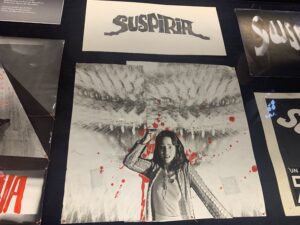
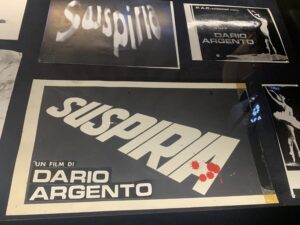
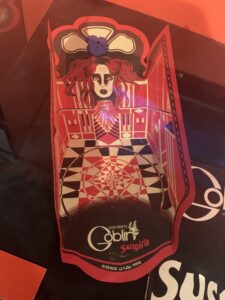
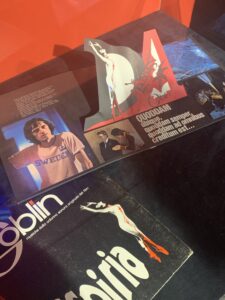




 We are excited to announce our next release on Bluray: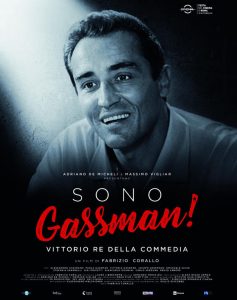


FACEBOOK
Join us on facebook for announcements. sneak peaks and more
follow us
TWITTER
We tweet about films, upcoming releases and other interesting yellow offers
follow us
PINTEREST
Follow us on Pinterest to discover ideas and inspirations
follow us